Industrial designer Bilge Turhan took part in the Accelerator4Crafts Residency Programme at the Icelandic Textile Center in Blönduós, Iceland, from 4–17 May 2026.
During the residency, Bilge explored the relationship between Icelandic wool, local seaweed, natural dyeing, and biomaterial experimentation. Her work brought together her background in industrial design with an interest in material innovation, sustainability, sensory experience, and textile structures.
A residency for exchange and experimentation
The Accelerator4Crafts Residency Programme is part of the exchange activities of Tracks4Crafts. It brings together online engagement and in-person, peer-learning residencies hosted by pilot organisations across Europe.
Through the programme, craftspeople, creative entrepreneurs, and researchers have the opportunity to collaborate, experiment, and share knowledge in real-world settings. Each residency creates space for hands-on exploration, dialogue, and connection with local craft communities, supporting the evolution of both traditional and contemporary craft practices.
Working with local materials
Bilge arrived at Kvennaskólinn in Blönduós with the intention of working directly with materials from the local environment, especially Icelandic wool and seaweed.
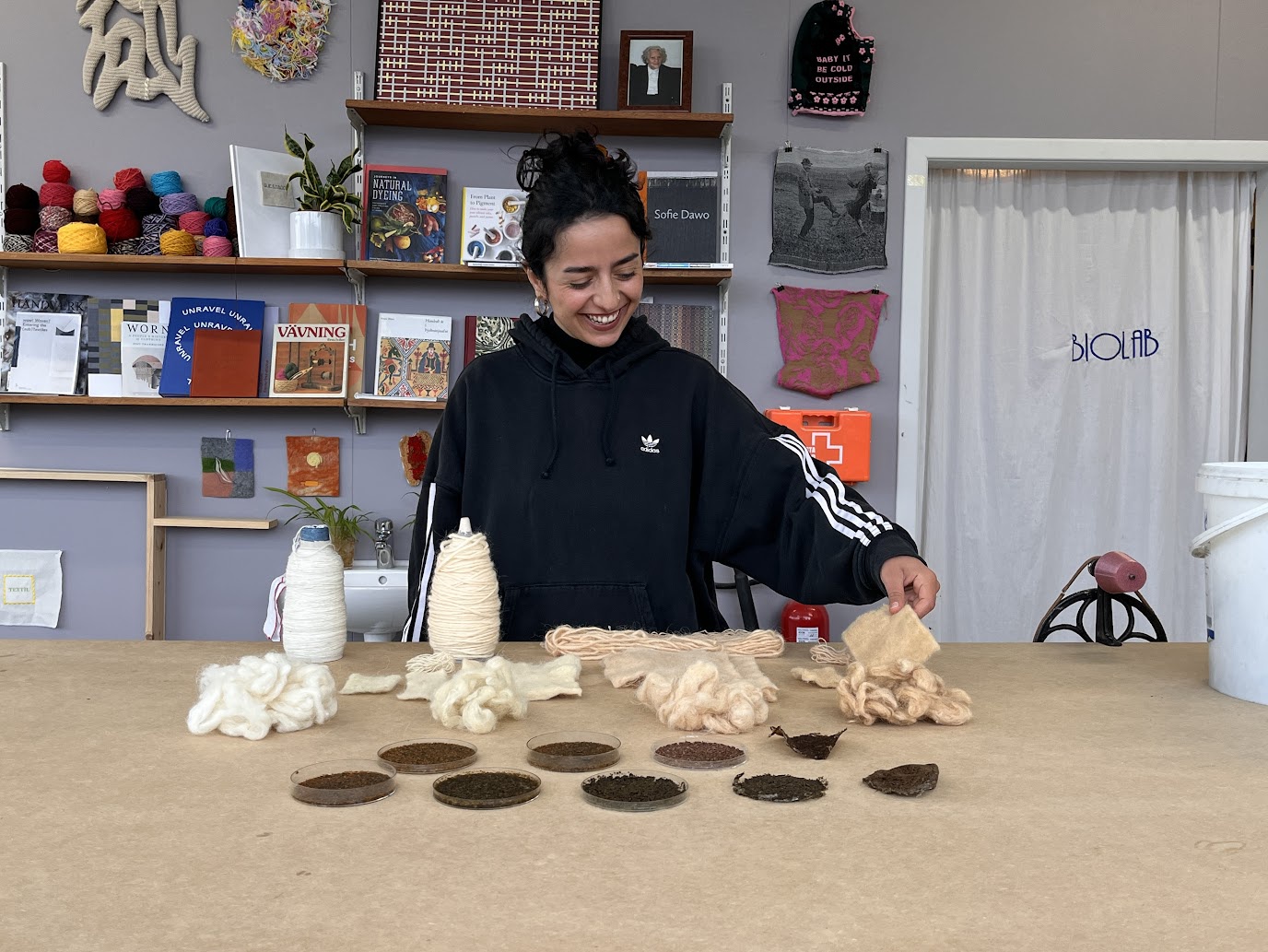
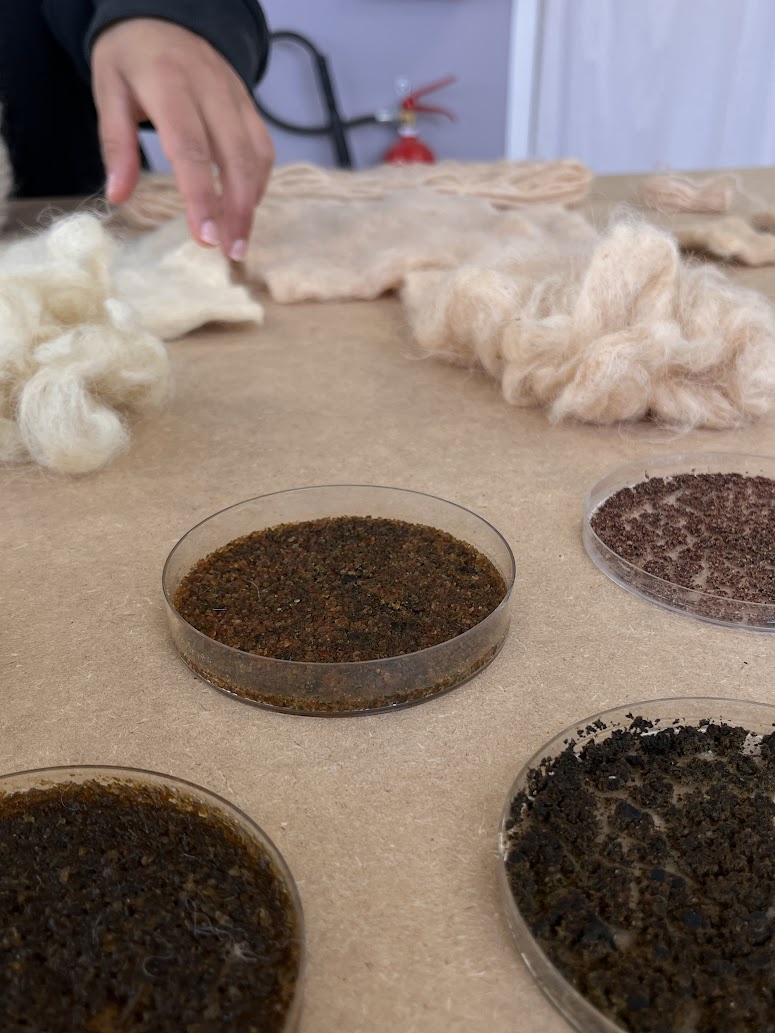
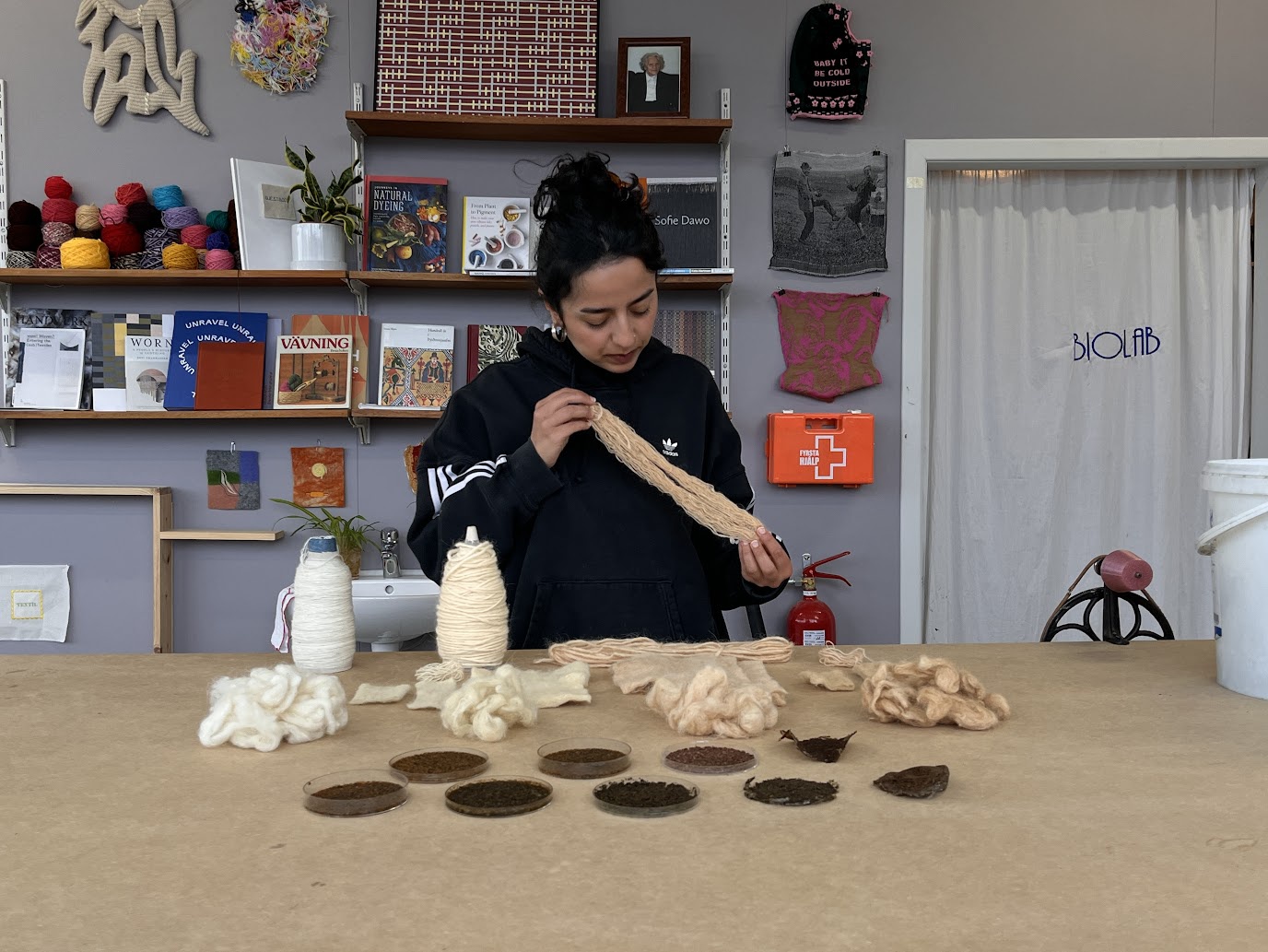
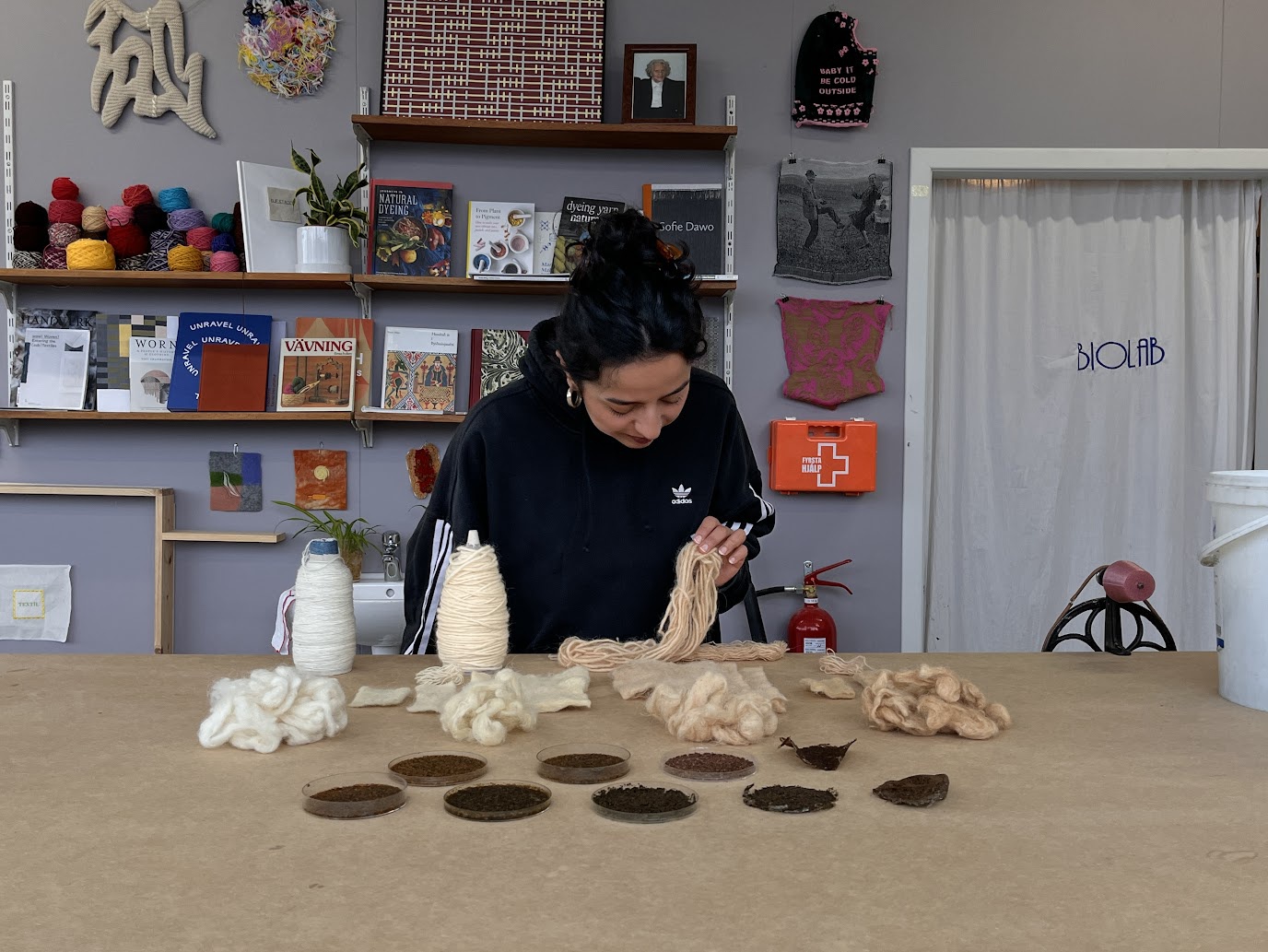
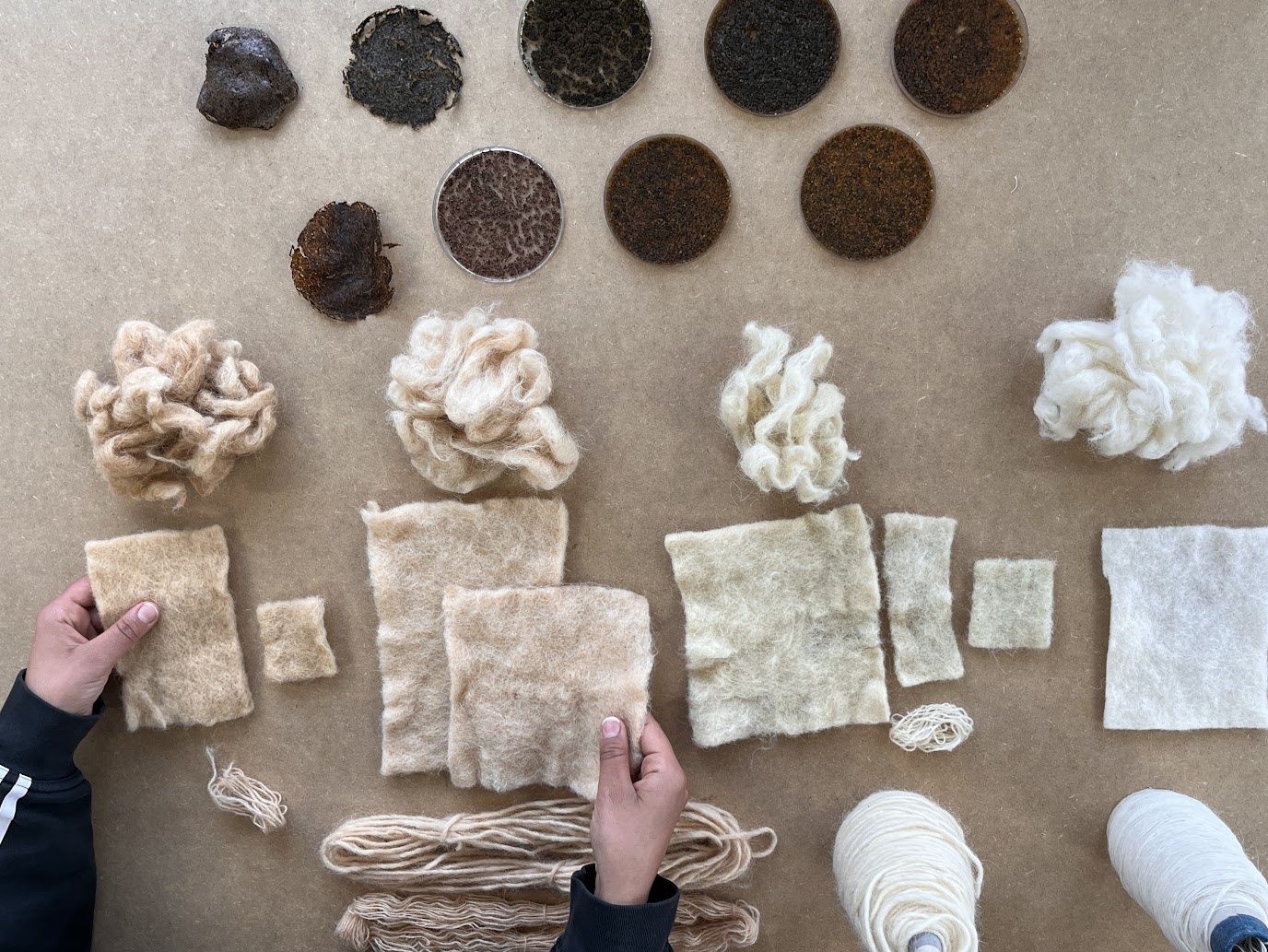
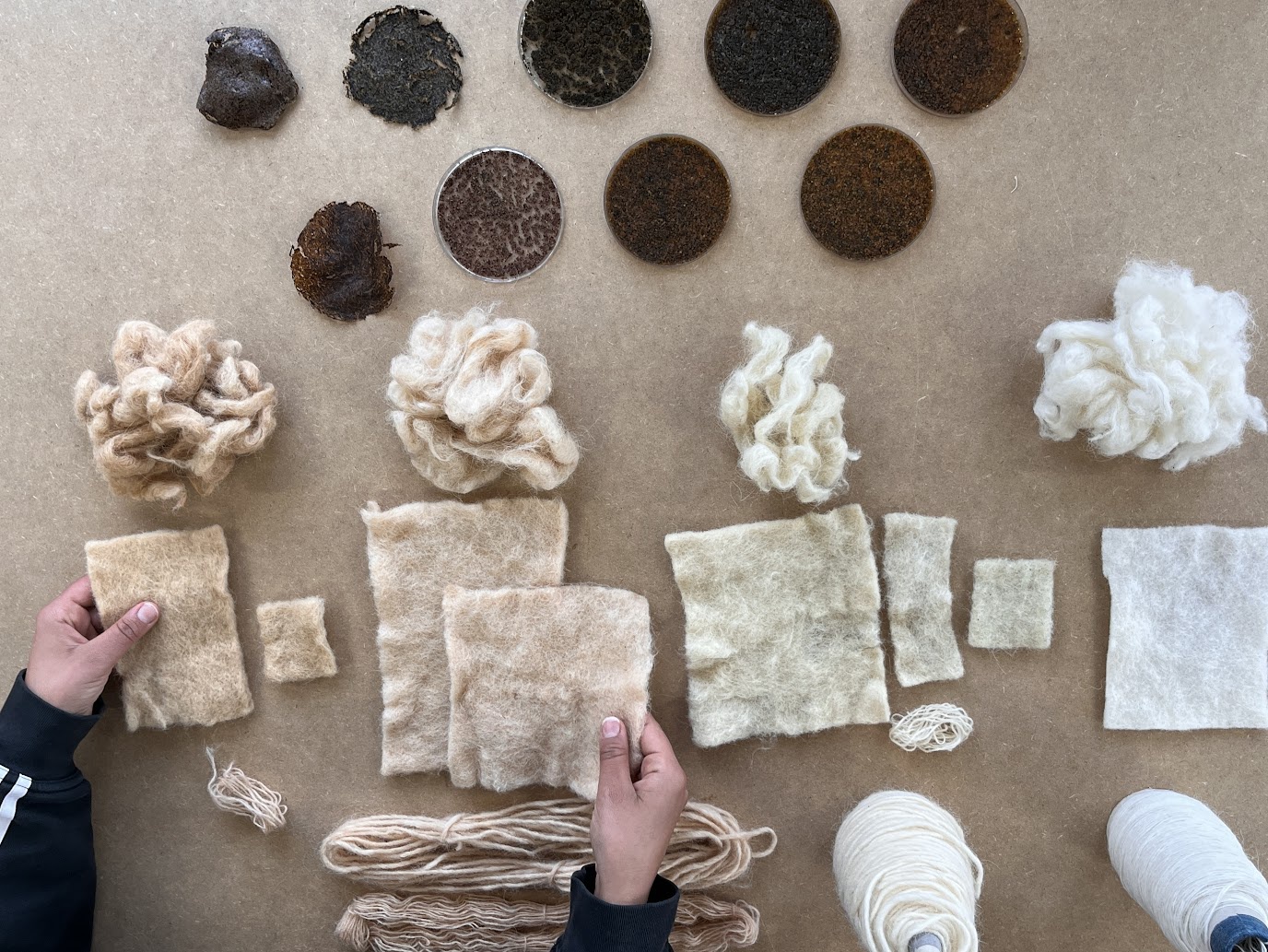
Her first step was to forage along the shoreline, collecting kelp, knotted wrack, bladderwrack, and dulse. These seaweeds became the starting point for her first explorations into natural dyeing. Using Icelandic wool in different forms, including yarn, fleece, and felt, Bilge tested the colour possibilities of each seaweed and different combinations of them.
One important discovery was that the natural tannin content of the seaweed made it possible to dye without chemical mordants. Through this process, Bilge developed a palette of natural, earthy tones and prepared samples to remain in the TextileLab.
From dyeing to weaving and knitting
Alongside the dyeing experiments, Bilge began working with hand-weaving on a frame. She carded and spun dyed fleece into a chunky yarn, which was then used in a tapestry. The hand-spun wool added texture and depth, showing how the material qualities of the fibre could become part of the final textile surface.
To conclude the textile part of the project, Bilge created a scarf using a hand-knitting machine. Both the woven and knitted outcomes revealed soft gradients of colour created by the seaweed dyes. The tones complemented the Icelandic wool, highlighting the visual and material connection between land, sea, and textile practice.
Discovering alginate from the source
In parallel with her textile experiments, Bilge also explored biomaterials. Her aim was to investigate whether sodium alginate could be found directly in brown seaweed. In her previous biomaterial work, she had often used sodium alginate as a processed, store-bought powder. During the residency, she wanted to understand the material closer to its natural source.
After several trials with kelp, Bilge turned her attention to bladderwrack. While dyeing with it, she noticed a gel-like consistency inside its air vesicles. She began working with this substance and applied a curing solution. The material successfully gelled, marking an exciting moment in the process: Bilge had captured alginate directly from the seaweed itself.
This discovery connected her biomaterial research with the residency’s wider focus on local resources, craft experimentation, and hands-on learning. It also showed how close observation of a material can lead to unexpected findings.
Craft, nature, and material knowledge
For Bilge, the residency was a space to try new things, learn from the local environment, and connect with Icelandic textile heritage. Her experiments with wool, seaweed dyes, weaving, knitting, and alginate show how traditional textile practices can meet contemporary material research.
Rather than treating sustainability as an abstract idea, Bilge’s work approached it through direct contact with place-based materials. The residency invited careful attention to what the landscape could offer, how materials behave, and how craft processes can reveal new possibilities through trial, failure, and discovery.
Bilge’s residency at the Icelandic Textile Center shows how local materials, craft processes, and biomaterial experimentation can come together through curiosity, care, and hands-on research.
Credits
Resident: Bilge Turhan
Residency Host: Icelandic Textile Center, Iceland
Residency dates: 4–17 May 2026